
You have a vision for your brand: a high-quality, professional cap that your customers actually want to wear. But in the world of global manufacturing, the distance between a “cool design” and a “box of unsellable inventory” is shorter than you think.
Whether you’re a startup or an established label, the cost of simple ordering custom hats mistakes can run into the thousands. From factory delays to logos that pucker after one wear, the risks are real. This guide pulls back the curtain on the industry’s “hidden traps” so you can protect your brand’s reputation—and your bottom line.
1. Trusting a “Sketch” Over a Tech Pack
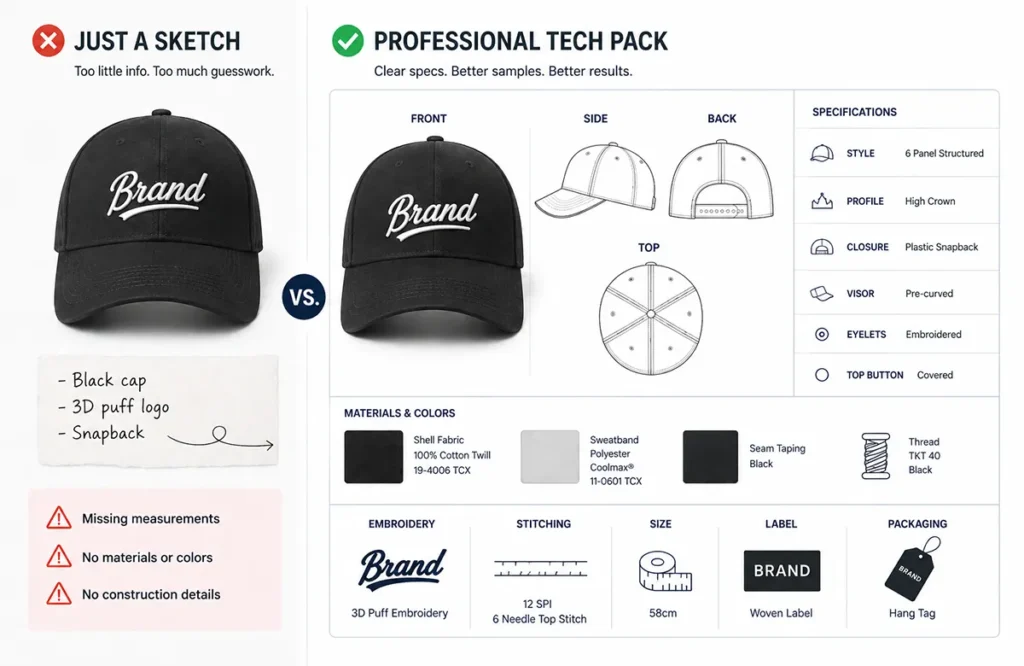
Many brand owners make the mistake of sending a factory a simple JPEG and hoping for the best. In professional production, hope is not a strategy. Without a Tech Pack, you are essentially letting the factory guess your stitch types, seam placements, and material grades.
Think of a Tech Pack as your insurance policy. It’s a detailed blueprint that keeps the manufacturer honest. When you skip this step, you often fall into the trap of “material creep,” where factories substitute high-quality fabrics for cheaper alternatives to save their own margins.
The Payoff: Investing in a professional tech pack (usually $100–$500) actually saves you money. Brands with clear specs typically only need 1–2 rounds of samples, while those without them often waste $1,000+ on 4–5 rounds of “almost right” prototypes.
2. The “3D Puff” Trap: Choosing the Wrong Decoration for Your Fabric
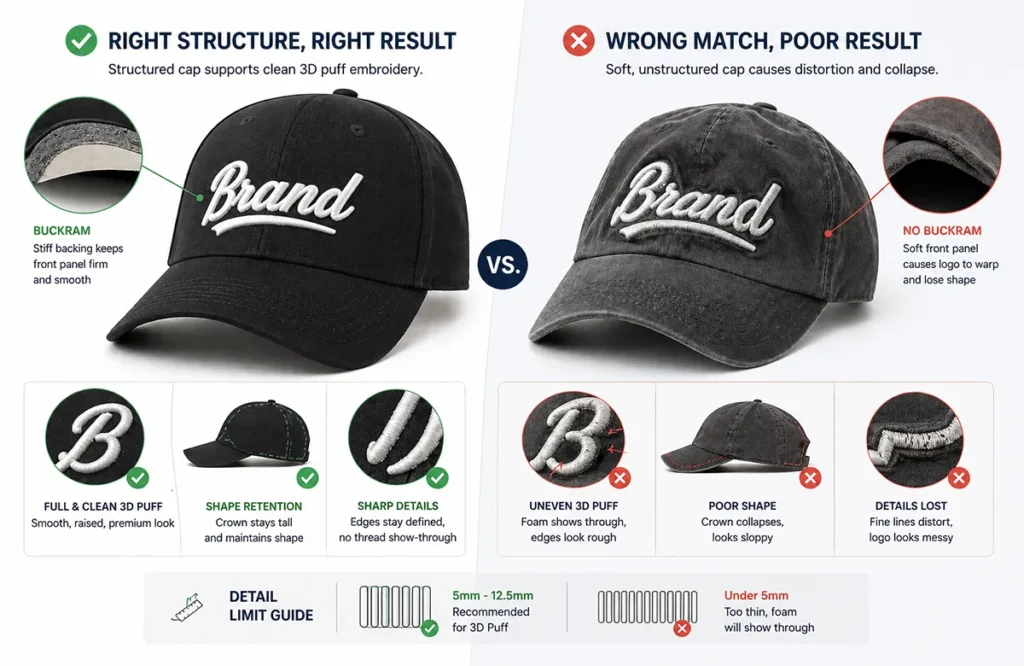
We all love the premium look of 3D puff embroidery, but it’s one of the most common sources of ordering custom hats mistakes. 3D puff isn’t just an aesthetic choice; it’s a mechanical one.
- The Foundation Matters: For that bold, raised look to stay crisp, you need a structured cap with “buckram”—a stiff backing behind the front panels.
- The Disaster Scenario: If you try to put a heavy 3D puff logo on a soft, unstructured “dad hat,” the fabric will warp, the crown will collapse, and your brand will look cheap.
- The Detail Limit: If your logo has fine lines or tiny text (under 5mm), 3D puff will fail. The foam will peek through, and the edges will look frayed.
3. Ignoring the “Hidden” Quality: Sweatbands and Linings
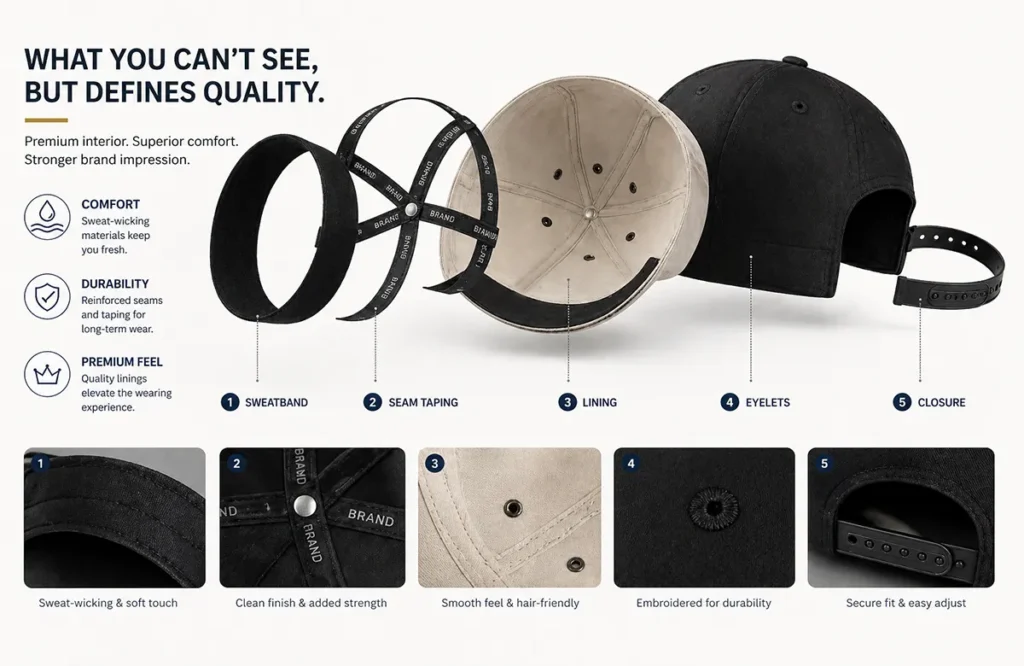
Your customer judged the hat’s look when they bought it, but they’ll judge the quality every time they wear it. The interior details are what determine if your hat becomes a daily favorite or a “closet-dweller.”
- The Sweatband: Don’t just settle for basic cotton. If your audience is active, you need moisture-wicking synthetics or performance blends (like Dri-Lex®) that don’t get “nasty” or stained after a week of use.
- The Lining: Premium lifestyle brands often add a satin or silk lining. Not only does this feel luxurious, but it also protects the wearer’s hair and prevents scalp oils from staining the outer fabric.
If you don’t specify these “invisible” details, the factory will use the cheapest stock materials available, undermining your entire brand presentation.
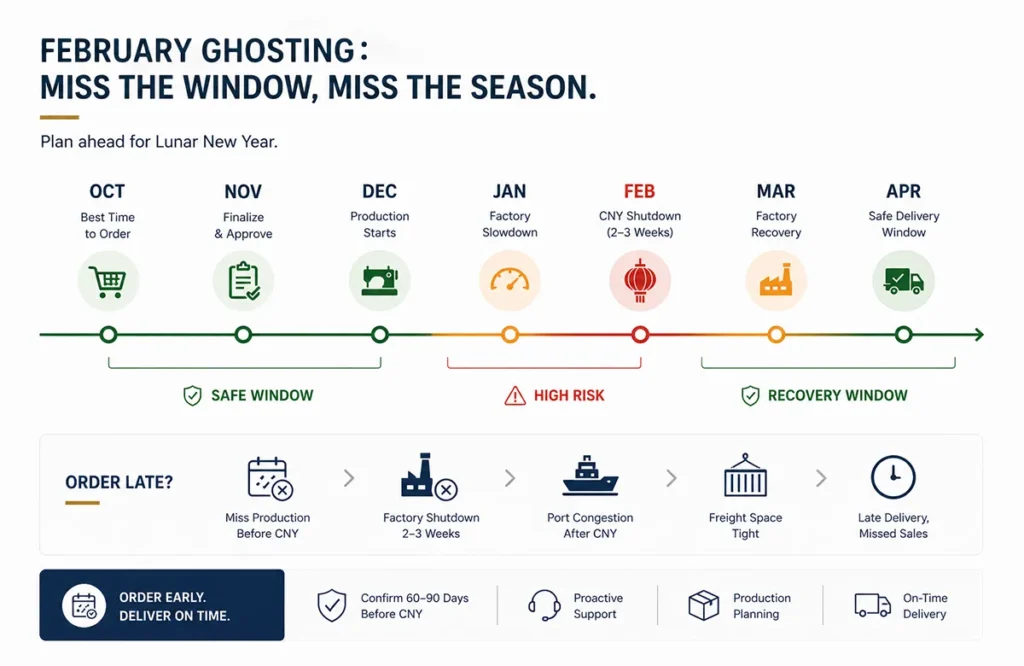
4. The “February Ghosting”: Missing the Lunar New Year
One of the most painful ordering custom hats mistakes is a timing failure. Most global headwear production centers around the Asia-Pacific region, which effectively shuts down for 6 to 8 weeks during the Chinese New Year (CNY).
The 2026/2027 Countdown:
- 2026 (Year of the Horse): CNY begins February 17.
- 2027 (Year of the Sheep): CNY begins February 6.
Factories begin tapering off 3 weeks before these dates. If your order isn’t finalized and “on the water” by early January, you risk your inventory being stuck in a production limbo until late March. Smart brands plan their Q1 inventory 6 months in advance to avoid surging freight rates and “blank sailings” (cancelled ships).
5. The “Digital-Only” Gamble: Skipping the Physical Sample
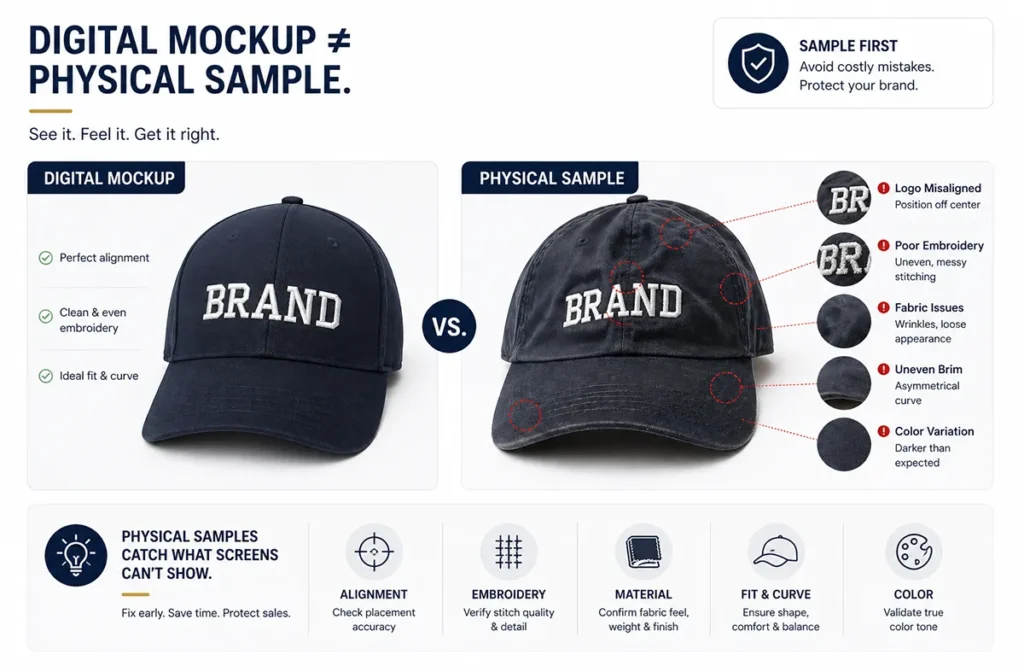
In the age of 3D mockups, it’s tempting to approve mass production based on a screen. This is a high-stakes gamble. A digital mockup can show you where a logo goes, but it can’t show you how the fabric feels or how the brim drapes.
The Miami Case Study: A streetwear brand recently skipped the physical sample to hit a launch deadline. They received 5,000 unsellable units because the pattern alignment on the crown was off by just half an inch—a mistake that a single $200 physical prototype would have caught instantly.
Always insist on a Pre-Production Sample (PPS). It is your final “source of truth” before you commit your entire budget.
Protect Your Brand: Consult with Hatrixhats to Avoid These Mistakes
Navigating the technical nuances of headwear procurement shouldn’t be your full-time job—it’s ours. Whether you are struggling with a factory that isn’t delivering quality or you’re just starting your first collection, an expert eye can save you months of frustration and thousands of dollars.
Stop guessing and start building. Don’t let a simple technical oversight ruin your next drop. Get a professional audit of your tech pack, verify your fabric-to-decoration synergy, and lock in your production timeline before the seasonal rush.
